


How to Remove Stains With White Vinegar (And When to Skip It)
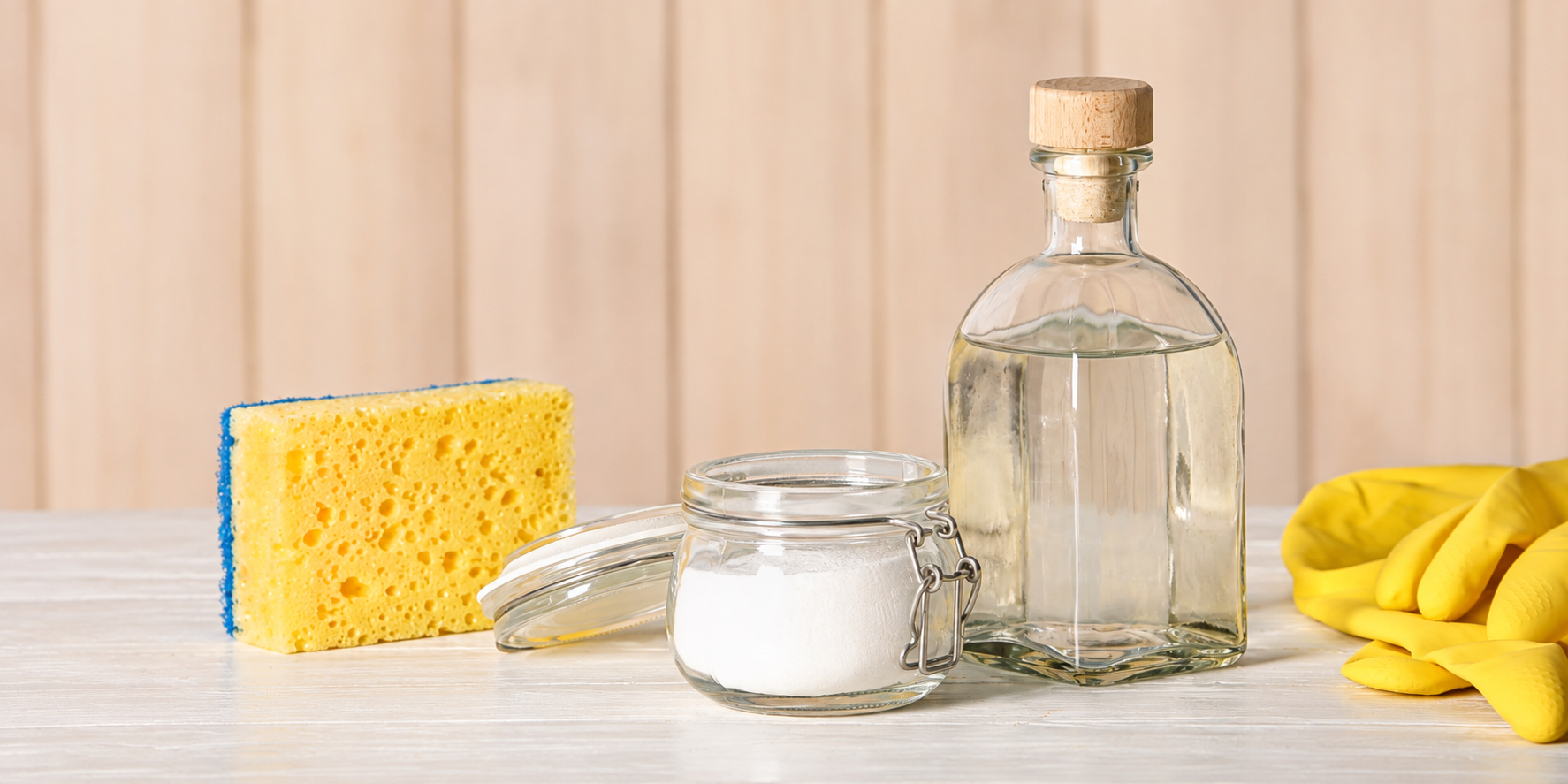
The grape juice hit the white school polo at 7:40, and the bus comes at 8:05. Somewhere online, a stranger swears white vinegar fixes everything. So you're at the sink with the jug in one hand and the shirt in the other, wondering if you're about to save it or ruin it.
Vinegar can help with the juice. It won't touch the bike grease on the other sleeve.
The stain you're looking at matters more than the bottle you grab. So start there: what white vinegar for removing stains does well, what it can't fix, and how to use it without damaging the fabric.
Key Takeaways
These three points cover most of what you need.
- White vinegar helps with sweat residue, detergent buildup, and hard-water stiffness. It does not help with grease, ink, or dye transfer.
- Dilute it, test it on a hidden seam first, and never mix it with chlorine bleach1.
- Treat a stain quickly, and keep the garment out of the dryer until the mark is gone2.
Does White Vinegar Remove Stains?
Sometimes. White vinegar contains acetic acid, which can help loosen certain stains and neutralize some odors, but it is a mild pretreatment, not a universal stain remover3. Extension specialists at the University of Kentucky put it plainly: there is no all-purpose stain remover, and the right product depends on the stain4.
What White Vinegar Actually Works On
Vinegar is a mild acid. Leftover detergent and soap are alkaline, and the University of Georgia's textile extension recommends acetic acid (white vinegar) as a substitute to neutralize alkalies3. That is why it earns a place in a few specific jobs.
Here is where cleaning stains with vinegar is worth your time.
- Sweat and deodorant marks – Give a diluted soak for each (ratios below). For old perspiration stains that have changed a fabric's color, use white vinegar, then rinse2.
- Detergent buildup and stiffness – If fabric feels stiff, harsh, or faded-looking, the American Cleaning Institute recommends a vinegar soak6.
- Hard-water streaks – Some powder detergents react with hard-water minerals and leave residue, which the same soak can address6.
- Musty smells – Vinegar can help with some odors.
- Tomato marks on whites – Use a sponge soaked in white vinegar or hydrogen peroxide as a mild bleaching step for white or colorfast-tested garments.
- Light coffee marks – Vinegar might help. For most food and drink stains, a pretreater or detergent is still the first choice.
Yellow underarm marks are their own problem. Learn more on how to remove armpit stains from shirts.
What Vinegar Will Not Fix
Vinegar is the wrong tool for the stains below, and reaching for it first wastes time you don't have. Here is what to use instead.
|
Stain |
Why vinegar falls short |
Try this instead |
|
Oil and grease |
Acid doesn't dissolve oil |
Work in liquid laundry detergent or a pretreater, then launder |
|
Ballpoint ink |
Ink needs a solvent |
Sponge with rubbing alcohol, rinse, pretreat, and launder |
|
Dye transfer and color bleed |
Vinegar can't lift dye that has moved into other fibers |
A laundry stain remover, then oxygen bleach if the label allows |
|
Set-in blood stains |
Protein that has bonded with the fabric over time or heat |
Cold rinse, then an enzyme soak of 30 minutes or more |
|
Rust |
A mild acid works slowly, if at all |
A fabric-safe rust remover. Never chlorine bleach |
|
Anything through a hot dryer |
Heat sets most stains |
Re-treat and rewash, knowing some set stains are permanent |
Still see a stain after washing? Before it goes in the dryer, try dabbing it with 3% hydrogen peroxide and line-drying in the sun. Peroxide can lighten colors, so test a seam first.
Then wash it as usual and check it before it goes in the dryer. You can expect your load of laundry to take 2 hours.
Does White Vinegar Stain Clothes?
Properly diluted white vinegar does not typically stain clothes, but colored vinegar can leave its own mark. Stick to white vinegar only.
The real risk is the acid itself. Vinegar can change the color of some dyes, so check colorfastness first. It can bleach some fabrics and damage elastic. If a dye does shift, rinse thoroughly with water.
That's why you always dilute it, and why you should never pour it straight onto colored fabric.
How to Use White Vinegar on a Stain, Step by Step
Check the care label first. It is the final word on any garment. Then work through these steps in order.
- Blot, don't rub. Lift the excess with a clean cloth.
- Mix a diluted solution. For sweat, equal parts white vinegar and water. For deodorant marks, use 4 cups of warm water to 1 cup of white vinegar.
- Test on an inside seam. Unstable dyes can lose color.
- Apply the solution and let it sit. For sweat, soak for up to 30 minutes. Stubborn stains get a soak, then a rinse and a wash.
- Rinse the vinegar out thoroughly with plain water before the garment goes in the washer.
- Launder as normal, with your regular detergent.
- Air dry and check. If any stain is left, try again before heat gets a chance to set it.
For stiff or streaky fabric, soak the fabric in a solution of 1 cup white vinegar in 1 gallon of warm water, then rinse6.
A rinse-cycle ratio is another matter. Whirlpool does not recommend vinegar directly in the machine, so check your manual before trying it5. Skip vinegar on anything with elastic. Treat delicate or dry-clean-only pieces according to the care label, not a kitchen hack.
Common Mistakes That Make Stains Worse
Never mix vinegar with chlorine bleach. The combination releases chlorine gas1. Do not mix household cleaners. If gas is released indoors, leave, open windows and doors, and stay out until it clears.
Don't pair vinegar with hydrogen peroxide in a single container, either. Together they form peracetic acid, which is corrosive and can irritate skin, eyes, and airways. Many oxygen-booster products contain hydrogen peroxide.
These mistakes are quieter, but they cost you clothes.
- Hot water on protein stains – Use cold. Hot water cooks the protein in.
- Rubbing instead of blotting – Rubbing pushes the stain deeper into the fabric.
- Drying too soon – Check the stain first.
- Undiluted vinegar on color – Dilute it and test it.
- Vinegar as a routine softener – Whirlpool says its acidity can weaken rubber seals and hoses over time. Follow your machine's manual.
When to Stop Treating and Hand It Off
The stain isn't getting any fresher as you scrub. Repeated rounds with the wrong product, or any heat, can lock a stain in. At some point, the better move is to stop.
That's where HappyNest can help. You set your detergent type, folding style, and water temperature when you sign up. Then you leave the bag at your door, and it comes back washed, dried, and folded the next day. But what is a wash and fold laundry service? It can help make your laundry errands easier.
HappyNest does treat stains. Put the stained item in the smaller Special Attention bag inside your main bag, and add a note in Additional Laundry Instructions. We'll do our best, though we can't guarantee removal, and pre-treating beforehand improves the odds.
Live Life, Not Laundry
Here's the rule of thumb. Use white vinegar for residue and odors. Use a purpose-made stain remover for grease, ink, and dye. And keep heat away until you know the stain is gone.
If you'd rather skip the experiments, here's how it works: per-bag pricing starting at $32.95 per bag, , and a 22" x 28" bag fits about 2 loads, no contracts, and your card is not charged until pickup. HappyNest provides professional laundry pickup and delivery with next-day return in service areas across the U.S. Service availability and pricing vary by location. Care requirements for individual items should always be confirmed against the manufacturer's care label.
Spills happen. Spending your weekend on them is optional! Schedule your next pickup at HappyNest.com.
FAQs
Does white vinegar remove stains from clothes?
It can, on the right ones. White vinegar helps with sweat residue, detergent buildup, and some odors. It is not effective on grease, ink, or dye transfer.
Does white vinegar stain clothes?
Diluted white vinegar does not typically stain. Colored vinegar can, so use white only. Vinegar can also shift some dyes, so test a hidden seam first and rinse well if the color changes.
Will vinegar take out stains that have already set?
Probably not. Vinegar is a mild pretreatment, and set-in stains usually need a purpose-made remover. For dried blood, rinse in cold water, then soak in an enzyme product for 30 minutes or more.
Can I put vinegar directly in the washing machine?
Whirlpool does not recommend it. Vinegar's acidity can weaken rubber seals and hoses over time, and it may reduce your detergent's performance. Check your machine's manual first.
Is white vinegar or baking soda better for laundry stains?
Don't combine them. Baking soda and vinegar neutralize each other, canceling out the benefits of both. Each can pretreat on its own, but detergent is still the best choice in the machine.
Can vinegar damage clothes?
Yes. It can change some dye colors, bleach some fabrics, and damage elastic. Dilute it, test it on a hidden seam, and rinse it out thoroughly.
Sources:
-
-
-
- Missouri Poison Center. 2025. Some Things Just Don't Mix: Poison Center Tips for Chemicals. https://missouripoisoncenter.org/some-things-just-dont-mix/
- American Cleaning Institute. 2026. Stain Removal Guide (updated March 31, 2026). https://www.cleaninginstitute.org/cleaning-tips/clothes/stain-removal-guide
- University of Georgia Cooperative Extension (Textiles). n.d. Products. https://site.extension.uga.edu/textiles/care/products/
- University of Kentucky Cooperative Extension Service. 1998. Stain Removal for Washable Fabrics (FCS2-840). https://publications.mgcafe.uky.edu/files/fcs2840.pdf
- Whirlpool. n.d. How to Use Vinegar in Laundry. https://www.whirlpool.com/blog/washers-and-dryers/how-to-use-vinegar-in-laundry.html
- American Cleaning Institute. n.d. Laundering Problems & Solutions. https://www.cleaninginstitute.org/cleaning-tips/clothes/laundering-problems-solutions
-
-
Recent Posts
-
How to Remove Stains With White Vinegar (And When to Skip It)November 5, 2026
-
 How Long Does a Load of Laundry Take? Wash and Dry TimesNovember 5, 2026
-
-
 What Does Borax Do for Laundry? How and When to Use ItNovember 5, 2026
-